Skip to content
// CLASSIFIED FILE //  MONSTER #4113

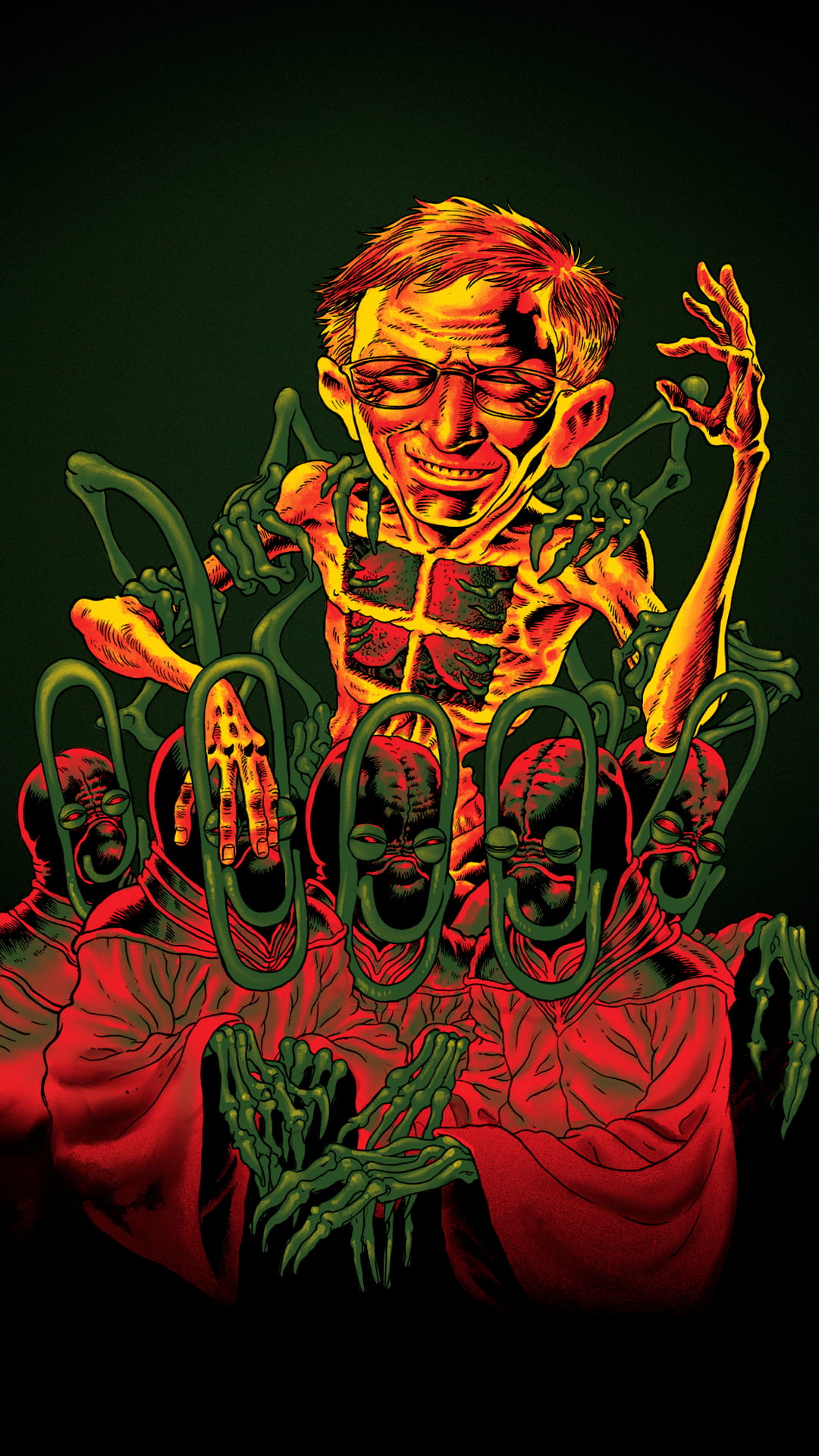
Bill Gates

Jimmy Fallon: “But will we still need humans?”
Bill Gates: “Not for most things.” source
Bill Gates
⚠ Epstein counter: 2,527 references ⚠
← Back to All Monsters
FILE_1

Digital ID

The Gates Foundation has made digital public infrastructure, including digital identity systems, a significant focus of its global development work, especially in parts of Africa and Asia. The foundation has supported initiatives such as MOSIP (Modular Open Source Identity Platform), an open-source digital ID framework developed in India and influenced by lessons from the Aadhaar program that uses biometric identifiers including fingerprints and iris scans to assign unique identification numbers. The systems are designed to link people to services such as banking, health care, and government benefit programs.

Gates Foundation has described digital public infrastructure as a tool for expanding financial inclusion and improving service delivery. He has pointed to India’s digital infrastructure model as an example of how digital ID and payment systems can reduce fraud, streamline benefit transfers, and increase access to formal financial systems. But once digital ID is tied to everyday transactions, opting out can become almost impossible. Technical errors, data inaccuracies, or authentication failures can affect access to services. Centralized identity databases concentrate enormous amounts of personal data, raising concerns about hacking, misuse, or abuse if political conditions shift.

FILE_2

AI Will Make Humans Unnecessary “for most things”

Once upon a time, Gates reportedly told a fellow tech titan he feared a future where humans became “carbon-based pets” of robots.

Now, Gates’ has embraced that deeply dystopian vision. Like the other Creep State billionaires, he foresees a future where human endeavor, experience and expertise are replaced by AI-powered robots. He predicts teachers, doctors, farmers, and many more will be replaced within ten years, “thanks” to AI.

Gates isn’t just hypothesizing, he’s actively working toward the goal. He has invested billions to create AI “tools” that will infiltrate our public services, from parole boards to social work to teaching. He’s invested heavily in next-gen microchip development. The Gates Foundation claims to want “AI equity,” but Gates’ own statements show the dark truth: he foresees a world where AI infiltrates our workplaces and displaces hundreds of millions of workers.

But don’t worry, workers. AI will fix it. As Gates promises, “many of the problems caused by AI can also be managed with the help of AI.” Do you believe him?

FILE_3

“Philanthropy” or Billionaire Control of Public Policy?

Gates’ “Giving Pledge” has made global headlines since it was announced in 2010. But is his “philanthropy” really helping people, or is it simply a nice cover story so that one unelected billionaire can control vast swaths of public policy while still profiting from his own “giving”?

For example, The Gates Foundation has exerted immense control over public health policy, especially in the Global South. The Gates Foundation, which has been documented to hold vast investments in major Pharmaceutical companies, has been accused of running “large scale clinical trials of untested or unapproved drugs to developing markets where administering drugs is less regulated and cheaper.” It’s a strategy that’s been called “vaccine colonialism.”

For more than two decades, Gates has simultaneously profited from his investments in pharmaceutical companies and used his wealth and platform to protect those companies’ intellectual property, thereby restricting access to life-saving drugs. This reached a zenith at the height of the COVID-19 pandemic, when The Gates Foundation wielded vast, international influence over vaccine policy and public health with little accountability to the public.

In another high-profile example, Gates meddled deeply in America’s public education system with often disastrous results. Gates was a major proponent of judging teachers with black-box algorithms, the disastrous Common Core curriculum experiment, and education “reforms” that failed our schools and most vulnerable students. Gates has been accused of using teachers and students as “human guinea pigs” in a massive, often harmful, high-stakes game that failed to improve schools—but still gathered vast quantities of data on millions of public school students. Gates’ meddling led to massive public backlash, but not before doing vast damage.

On issue after issue, Bill Gates has used the vast wealth of his foundation to pursue his own ideological ideas—and in many cases to benefit companies in which he and the foundation are invested.

FILE_4

Population Control

Bill Gates argues that rapid population growth in the world’s poorest regions could make it harder to fight climate change and reduce poverty. He draws on demographic transition theory, which holds that high child mortality in low-income countries encourages larger families as a form of protection against loss. In response, he advocates for large-scale investments in vaccines, nutrition, healthcare, and contraceptives to reduce child deaths. This, he says, enables people to choose smaller families, naturally moderating future growth. In his 2010 TED Talk, Gates suggested that accelerated progress in these areas could lower projected population peaks by 10 to 15 percent, framing it as a way to ease pressures on resources and enhance sustainability.

The Gates Foundation spends billions on family planning, contraceptive development, women’s education, and child survival initiatives across the Global South, which it frames as expanding personal choice while improving health and economic outcomes. Fewer child deaths, the logic goes, lead to smaller families by choice, easing pressure on resources. At the same time, the foundation’s dominant role, often through partnerships with Western organizations and corporations, means one unelected billionaire wields outsized sway over health priorities in sovereign nations and communities.

FILE_5

Corporate Monopoly Power

Gates’ fortune was built on Microsoft’s Windows operating system dominance, which held over 90% of the market share for PC operating systems in the late 1990s. The U.S. government’s landmark 1998 antitrust case, United States v. Microsoft Corp., filed by the Department of Justice along with 19 states and the District of Columbia, accused the company of illegally maintaining this monopoly through anticompetitive tactics including bundling Internet Explorer with Windows to crush competing browsers and using exclusive deals to limit technologies like Java.

Microsoft has since expanded into enterprise tools such as Microsoft 365, Teams, and Viva Insights that track email patterns, meeting habits, collaboration networks, and productivity data. Microsoft promotes these tools as ways to boost productivity, but they also allow employers to monitor employees’ communications and habits more closely. Gates no longer runs Microsoft, but it remains the foundation of his wealth and influence.

FILE_6

Epstein Connection

Gates met with Epstein multiple times years after Epstein’s 2008 conviction, and he left a paper trail of his encounters in his emails: “A very attractive Swedish woman and her daughter dropped by and I ended up staying there quite late,” he emailed colleagues after one meeting.

Gates later called spending time with Epstein “a huge mistake” because it gave Epstein credibility. Melinda French Gates said Epstein was “evil personified” and that meeting him gave her nightmares. She made clear she told Bill she hated the association and said it was one factor in their divorce.

Gates has since admitted to having extramarital affairs with two Russian women, which Epstein appears to have learned about and possibly used for leverage, writing in an unsent draft email that his role had involved “helping Bill to get drugs, in order to deal with consequences of sex with russian girls, to facilitating his illicit trysts, with married women.”

FILE_7

Global Ag Policy Control

The Gates Foundation is one of the most powerful private actors shaping agriculture and development policy in the Global South. Through billions in grants to governments, research institutes, and NGOs, it has promoted a corporate-driven “Green Revolution” model centered on commercial seeds, synthetic fertilizers, and global markets. This approach directs public policy and research funding toward farming that depends heavily on purchased seeds, fertilizers, and chemicals and away from farmer-led alternatives and locally adapted seed systems.

One of its flagship efforts is the Alliance for a Green Revolution in Africa (AGRA), launched in 2006 with major Gates funding. The initiative promised to raise crop yields and reduce hunger, but after more than a decade and billions of dollars, independent evaluations by international development and advocacy groups report limited progress in the countries where it was deployed while many farmers face higher costs for seeds and fertilizer, and hunger rates increased.

FILE_8

Shared investments with tech billionaires

Gates’ Breakthrough Energy Ventures, backed by billionaires including Jeff Bezos, Marc Andreessen, Reid Hoffman, and Mark Zuckerberg, has invested in AI-powered mineral exploration company KoBold Metals since 2019. KoBold also counts Andreessen Horowitz as an investor, and Sam Altman via his Apollo Projects fund. In 2021, KoBold formed a joint venture with Bluejay Mining (now called 80 Mile) for Greenland’s Disko-Nuussuaq critical minerals project, but as of last year, KoBold has fully exited its interest back to 80 Mile.

Breakthrough Energy Ventures has investments in more than 100 companies, including autonomous farming venture Inevitable, warehouse robotics business Guidewheel, and a biotech company called ArkeaBio that is developing a vaccine to lower methane emissions from ruminant animals.

← Return to All Monsters